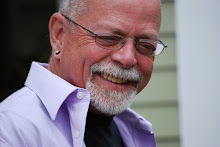
by Dwight Cathcart

by Dwight Cathcart

Sunday, July 3, 2011

Betraying the great history of gay people

There is a range of ways men can array themselves with one another, but most of the traditional forms of relationship depend more or less absolutely on the concept of ownership. The two people in the relationship own each other. They can’t have sex with anyone outside the relationship, they can’t spend time with someone outside the relationship. These forms of coupling come at a high cost, as men wander, and as both sides in the relationship levy charges of betrayal. 
Some gay male couples avoid this pattern by specifically not claiming ownership. A man is free to go and come as he wants without being questioned by his partner. No one in such a relationship is ever asked, “Why didn’t you come home last night?” Or, “Where were you last night?” Each man in the relationship is absolutely free to do exactly what he wants to do whenever he wants to do it and does not ever expect to be questioned on it.
In such a relationship, both men avoid making promises—specifically the promises in the traditional marriage service about monogamy and about staying together till death. The assumption is that these couples will stay together as long as it is good for both of them. These relationships are often opened up to include a third partner or a number of other partners who stay temporarily. 
There are, of course, other ways for men to come together. Books have been written on the subject. My point here is that many of us know men whose relationships would have to be described in a whole range of ways. What is notable about the gay community is that, in the centuries during which we have been excluded from heterosexual marriage, we have used our time well. We’ve explored what was possible, determined to find out what worked and what didn’t. Many of us have concluded that ownership of one’s partner doesn’t work, and all that emotional energy expended on expressions of betrayal and grief because the other person has acted the way many men act is merely wasted energy. We have learned that sex is not the same thing as love and that the quickest way to destroy a relationship is to act as if everything were to depend on sexual fidelity.
Now then, at this point, when we are about to start marrying legally in ever-increasing numbers, it would be a shame if any large numbers of us forgot the rich history of gay people, forgot the ways we learned to act when legal marriage was closed to us, forgot that we learned years ago that feelings of betrayal are really just wasted energy, and forgot that we know more about what men are sexually than anyone else in our culture. If we start arranging our relationships as if we were straight people, presided over by a priest, we will have betrayed ourselves and we will have betrayed the great history of gay people.
Monday, June 27, 2011

'We were outgunned.'

On Saturday and Sunday morning, the images of the celebrating crowds in front of the Stonewall Inn reminded many of us of the images of the very angry crowds in front of the same inn, almost exactly 42 years earlier. Then, there were no professional photographers, and the black and white images were grainy and out of focus, and nobody was posing for the photographer. The commentaries on Friday night’s vote pointed out that, at last, we have come from the Stonewall Riots to Gay Marriage, from the initial eruption of gay liberation to the final fulfillment of gay liberation. This linkage invites a comparison and emphasizes that the first was violent, and the second was a legislative act. I saw in some places (but can’t find them now) pictures of the Stonewall Riots, side by side with pictures of the celebrations on Friday night on the same block of Christopher Street. How far we’ve come, it was easy to think, from anger to celebration!
And yet, look at how the Times describes the series of actions that took place to bring about victory. In “Behind N.Y. Gay Marriage, an Unlikely Mix of Forces, by Michael Barbaro,” the reporter describes the changing dynamic, “where Wall Street donors and gay-rights advocates demonstrated more might and muscle than a Roman Catholic hierarchy” Later, Barbaro says, “it was clear the church had been outmaneuvered by the highly organized same-sex marriage coalition, with its sprawling field team and, especially, its Wall Street donors.” The emphasis in these paragraphs is on the use of force, use with a military tinge. “‘In many ways,’ acknowledged Dennis Poust, of the New York State Catholic Conference, ‘we were outgunned.’” Instead of a discussion of moral issues or even of legal issues, the “road to gay marriage” is being presented in terms of physical struggle, and the Governor, the Wall Street donors, and the gay-rights advocates were stronger. and better at fighting that their opponents. Progress forward has a violent edge, and it is here that the Stonewall Riots and the “road to marriage in New York” belong in the same sentence. 
It is hugely satisfying to me that our side proved stronger and better fighters than the Republicans and the Roman Catholic Church. That’s just so goddamn satisfying. One of the lessons of the Riots was that the days of our being weak were now over, and from now on we were going to be the fiercest son-of-a-bitch to walk down Christopher Street. And sometimes we are. And when that happens, I thank my good luck that I live in these times when gay people are fierce as well as free.


Monday, June 20, 2011

Jack's narrative

A friend said, on reading some story I had written, “Your character missed the whole sixties.” 

What my friend meant was that my character had missed my friend’s idea of the sixties. My character lived through the sixties in a heterosexual marriage, in middle-sized cities in the upper South and in the Midwest. My friend lived through the sixties as a gay man in Boston, and he wanted my character to come out at a certain point, be activist leftist politically, be anti-war and pro civil rights, do drugs, and have uninhibited gay sex.

That is absurd, of course. There are many ways to experience any decade.

There is some evidence that Jack Twist had a more stereotypical time of the sixties than Ennis del Mar. He smokes marijuana, he seems more experienced in sex than Ennis, and he seems less tied down to one bit of geography. When Jack presents his erect cock, Ennis knows enough to know what to do with it but he has already been deeply enough rooted in his times to refuse Jack’s invitation to the rest of it.

What we’re getting to here is the narrative we tell ourselves. Men experience their times individually, as Ennis and Jack show us, and it may be that this is getting more and more true. There are rumors that “coming out” is not universally necessary any more. Imagine the freedom of being able to live your life without owing that particular action to anybody. That leads to another freedom—the freedom to refuse to say whether you are gay or straight, as some people refuse to fill in the blank male or female as an intolerable intrusion of privacy.

Imagine what Ennis’s life would have been like if he could have done what he did do, without feeling that he was doing something wrong—or that he needed to declare anything. What if he could have worked out a shared devotion to both Alma and Jack? Or left her for him without the fear of the tire iron? What if we gave each other the freedom to live through the sixties—or any other decade—in the way each person wanted, as he explored his feelings and took on the obligations and responsibilities that he chose and personally assumed? In short, what would it be like if I could write my own narrative and didn’t have to live your narrative?
Wednesday, June 15, 2011

Ennis del Mar

I watched Brokeback Mountain a couple of nights ago and then read the story again, and I noticed how carefully Annie Proulx lays out Ennis del Mar’s predicament. 
In the summer of 1963, when Ennis del Mar and Jack Twist met, Wyoming and Texas still had sodomy laws, and Ennis and Jack were subject to prosecution for what they did together in the pup tent. 
In 1967, when Ennis saw Jack for the first time after Brokeback, he tells him about his dad and his brother T. E. and about the tire iron and the bloody body in the ditch (p. 29). Whatever Jack thinks about this story, for Ennis the danger is real. He says, referring back to their kiss on the staircase, “We do that in the wrong place we’ll be dead” (p. 27). At the end of Brokeback Mountain, both the movie and the story, Ennis listens to Lureen tell him about Jack’s death, and he concludes, “They got him with the tire iron” (p. 45). 
Even before Ennis met Jack, he already knew what he was going to do with his life. “In 1963 when he met Jack Twist, Ennis was engaged to Alma Beers” (p. 5). That was settled.  “In December Ennis married Alma Beers and had her pregnant by mid-January” (p. 18). The reader isn’t told what Ennis actually thinks about what he’s doing. He does this, and then he does that, what’s expected of him. “The second girl was born” (p. 19), and he’s trapped. He doesn’t struggle. Lying in bed with Jack, Ennis says, “I like doin it with women, yeah, but Jesus H., nothing like this.” Then Ennis describes his problem. “Took me about a year a figure out it was that I shouldn’t a let you out a my sights. Too late then by a long, long while” (p. 26). Too late. But it’s too late in a different way than the one Ennis means. It was already too late by the time he finds Jack at the beginning back in 1963.
When Ennis is divorced in 1973, it’s not because he decides to come out—the Stonewall Riots had happened in 1969, and all over America gay men were now rethinking their options—it was because apparently he couldn’t change the way he was. It was Alma who left Ennis, not the other way around. “She said, what am I doin hangin around with him, divorced Ennis, and married the Riverton grocer” (p. 32). Ennis doesn’t have much control over his life. “I built a life up in them years. Love my little girls” (p. 27), he says. Now there’s parenting, child support, obligation. “If you can’t fix it, you got a stand it” (p. 30).
They can’t change what they are, and they can’t change how they feel, and they can’t get away from Wyoming—“All the travelin I ever done is goin around the coffeepot lookin for the handle,” Ennis says (p. 40)—and Ennis sums it up, “I’m stuck with what I got” (p. 29). It’s a mistake to read Brokeback Mountain as if it were about a man who made a mistake. Ennis did not make a mistake. When the guy came who presented him with an erect cock, Ennis knew what it was and what it was for, and what it meant. His tragedy is that he also knew he couldn’t do much about it. And he knew this from the beginning.
Ann Proulx, Brokeback Mountain, New York: Scribner, 2005. Originally published in The New Yorker, October 13, 1997. Page numbers in this posting are to this Scribner edition.

Brokeback Mountain, Director Ang Lee, Starring Heath Ledger, Jake Gyllenhaal, Anne Hathaway, Michelle Williams
Saturday, June 11, 2011

Pride

Today is Gay Pride in Boston. This celebration marks the forty-second commemoration of the Stonewall Riots, and the forty-first Gay Pride march. The first was held in New York in 1970 and was called Christopher Street Liberation Day march. In successive years, other cities held their own Gay Pride marches, most of them on some weekend in June to commemorate the Stonewall Riots. On that first march, people assembled on Washington Place and Waverly Place and then, at two o’clock, walked up Sixth Avenue to Central Park and then to the Sheep Meadow. Good accounts of this first march are in books by David Carter and by Martin Duberman. 
A parade or march had never been held before, and the first organizers were very afraid no one would show up. They thought that even if only one thousand people showed up, that would still be the largest gay demonstration ever (as opposed to size of the Stonewall Riots, which were several thousand people) (Carter, p. 253). Craig Rodwell, the owner of the Oscar Wilde Memorial Book Shop, assumed that they would never get a thousand people to walk from the Village to Central Park. When the march started, participants were intensely afraid of violence.
There were many more people on the sidewalks than in the march, as people hung back, afraid, or unsure whether they wanted to come out publicly. Then, gradually, people stepped off the sidewalk into Sixth Avenue, joining the group in the middle of the street. 
The first banner read “Christopher Street Liberation Day 1970” (Carter, p. 253). The first group, with its own banner, was the Gay Activists Alliance. They had two hundred marchers. Other participants had come from Philadelphia, from Washington, and from Baltimore. The Daughters of Bilitis, and the Mattachine Society of New York were there. The Gay Liberation Front marchers included some of the homeless street kids (Carter, p. 254). There were also groups from colleges and universities in Manhattan. In all there were about twenty identifiable groups (Carter, p. 254).
The march was fifteen blocks long by the time it reached 22nd Street (Carter, p. 254), and Carter describes how participants, when they realized how big the march was becoming, became more and more excited. Their excitement—and their joy at being out in the middle of Sixth Avenue among their gay friends—caused others to join them from the sidewalks. Apparently, as their numbers increased, they experienced a kind of euphoria—about themselves, about their community, and about what they had come to do.
The story of this first march is a thrilling one, almost as thrilling as the story of the riots themselves, and I recommend both. In reality, these are small events, even as they seemed huge to the participants, and getting to know them is to get to know a fairly small cast of characters—Craig Rodwell, Sylvia Ray Rivera, Jim Fouratt, Tommy Lanigan-Schmidt, Jackie Hormona, Arthur Evans, Marty Robinson, many of whom appear not only in the histories of these events but in pictures. The identities of many others are, unfortunately, lost to history.
It is important to remember today, on Gay Pride Day, that all of this began in a successful application of violence, as gay people resisted the attacks of the New York police. And what we commemorate today, when we march, is that we fought back. We should never forget that.

David Carter, Stonewall: The Riots that Sparked the Gay Revolution, New York: St Martins Griffin, 2004
Martin Duberman, Stonewall, New York, A Dutton Book, 1993.