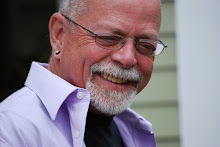
by Dwight Cathcart

by Dwight Cathcart

Friday, July 13, 2012

Uncomfortable truths


I was on Boston common today, talking to a friend. We’d just gotten to know each other and we were asking the kinds of questions people ask, exploring each other’s lives. He asked me, “Since you’re gay, how did you manage to stay married so long? How did you do that?” 
I told him, “Even though you’re straight, you could do that too, have sex with a man,if you wanted to bad enough, or if you needed to, or felt you had to.”
He said, “Not if my life depended on it.”
I laughed. “That’s probably the wrong kind of stimulus to be brought to bear on this issue. But something else. Look, people do it all the time. They don’t change their orientation. You can’t do that. What they do is go outside their orientation for a short time. I did it.”
“No. Nothing can make me able to have sex with a man.”
Probably each person requires a different kind of stimulus, but people are subject to external stimuli.  Money is a stimulus for some people. Give them enough, and they’ll do anything. Other people, something else—respect, place in the community, power. There is a whole range of things that affect how men and women choose the gender of the person they are going to have sex with, and getting turned on is only one of them. Witness the millions of gay men who have gotten married and fathered children in the last hundred years. And the probably smaller number of straight men over the years who have had sex with gay men under a range of stimuli—often alcohol or drugs. We discussed the opening scene of True Romance and Christian Slater’s character telling us under what conditions he would have sex with Elvis Presley. If I had to. I mean had to. He thought Elvis was as pretty as any woman.
What I didn’t say to my friend, but could have, since it is true, is that sexuality is malleable—to an extent and for a short time. I could also have said that a man can’t permanently alter his sexuality. But anybody can do anything tonight, if the stimulus is right.
Friday, July 6, 2012

Honoring what gay people know


I recently wrote to a friend: “Like most peoples who are faced with the possibility of assimilation, many gay people wonder what they will be giving up in the process, and what they will be getting in return.”
You see it every day in the city, watching Hispanics, some struggling to adopt English, others not, many of whom are determinedly holding onto Hispanic ways. Blacks have been facing the same dilemma for the last 150 years. And women too, as any woman will understand. While gay people have been discriminated against, they have developed modes of self-defense, which, they fear, will be lost if they are assimilated. It is not all about loss or gain of civil rights. It may not even be mainly about civil rights. What I think people would like most is to get freedom (that is, to get civil rights) without giving up anything. One example: We would like to get marriage equality, but have the "marriage" be an arrangement of our own creation, not the creation of heterosexual courts or the heterosexual congress, or patriarchal, heterosexual churches. I think we want a "gay marriage" that is more profoundly honest for both parties than the heterosexual marriage we see before us. I think we fear getting into a relationship in which we are forced to play out the gender roles that the straight community plays out in marriage. 
Many gay people resist giving up what we have learned during our time in the wilderness. A person rarely reads, anywhere in the straight media, anything that would suggest straight people understand that they might have something important to learn from gay people. And gay people know this. Gay people think, we have learned so much, and straight people don't value what we know.
Tuesday, June 26, 2012

The Stonewall Riots and me


Today is June 26th, and tomorrow is June 27th, and after midnight tomorrow night, one hour into June 28th, we will be into the forty-third anniversary of the Stonewall Riots. If you stay up one hour past midnight, it will be exactly forty-three years since Lt. Pine led his cops into the Stonewall Inn. 
I could say I don’t know why I am so moved by the story of the Stonewall riots. I choke up just reading about it. I know about the history before Stonewall, about the Mattachine Society and the Daughters of Bilitis and the riots on the West Coast, and I know about Frank Kameny. I’ve read, over and over, about the big woman and her part in the riots—she was the first person to really fight back—and about the anonymous kid (just about everybody agrees it was a kid) who, when watching the big woman fight her fight so heroically, cried out, “Help her!” And they did, and that’s when it started. But that doesn’t add up to why I am so moved by the story of Stonewall. 
The reason I’m so moved is that I think I know what it must have been like to be a person who had never fought before and was so furious that he waded into that mob and didn’t care what happened so long as he was fighting back. When the time came for me to come out, I was afraid that the people I loved most at that time would cease to love me. I felt I was about to lose every thing that mattered to me, and every person who mattered to me, and I was afraid it was going to hurt, and I wouldn’t be able to stand the pain. Yet I went ahead and did it. I took a breath and laid it all out and refused to waiver. I just refused to say anything but, “I’m gay, and nothing’s going to change that.” And that gave me courage. 
It was days, weeks, months, a year, before the pressure eased up and I began to realize that I’m going to survive. They fought at Stonewall, and when my time came, I fought too, and when I read about Stonewall, it’s as if I’m back there, and I know how it feels to fight and be afraid and yet to fight anyway.

Saturday, June 23, 2012

We live in a world they made


Today is Alan Turing’s one-hundredth birthday. Alan Turing contributed to the Allies winning World War II by breaking the Enigma codes that Germany used to communicate with its submarines. He had a large hand in inventing the computer that we use today and that today Google is celebrating by the publication of a “doodle,” which you must have already seen because it’s everywhere on the web today. And Turing is an original gay martyr to bigotry and anticipated gay liberation by decades. He died June 7, 1954, the apparent victim of a suicide after appalling treatment by the British Government for acknowledging his homosexuality. A biography about him, Alan Turing: The Enigma by Andrew Hodges, was published in 1983, and last month was brought out again (It is also available as an ebook for Kindles).  There was also a Broadway play. Google “Alan Turing”, and today see his name on the Google News page, under Technology or Google “Alan Turing Google Doodle.”
Paul Mariani published The Broken Tower in 1999, a biography of Hart Crane, out of which James Franco made a movie in 2011. Hart Crane was another major gay figure who committed suicide (April 27, 1932). Franco seems to have made it an artistic cause to retrieve into the cinematic canon documents from the gay past. He brought out HOWL in 2010, a movie about Allen Ginsberg’s first public reading of his poem.
The point here is the books about these men—The Enigma, The Broken Tower. There has been, in the years since Stonewall, a great interest in the lives of gay men and women in the past, and that interest has resulted in a flourishing of biographies and histories. 
The great histories—Christianity, Social Tolerance, and Homosexuality: Gay People in Europe, from the Beginning of the Christian Era to the Fourteenth Century, by John Boswell, is one of the first great works of scholarship on our community. Hundreds of others have followed, notably Stonewall by David Carter, on the riots themselves. There have been the histories of gay New York that preceded the Stonewall Riots, principally Gay New York, 1890-1940, by George Chauncey, and The Gay Metropolis, 1940-1996, by Charles Kaiser, and scores more.
All these books pose the question, Who were the people who went before us? And what did they do? It is one of the strongest aspects in gay liberation, whose anniversary we are approaching next Friday and Saturday, June 27 and 28, 2012, which is the forty-third anniversary of the Stonewall Riots. 
This week I have re-read Ceremonies, about events in Maine during the summer of 1984 when Charles Howard was murdered and have been reminded of one of my goals when writing that book: What was it like to be gay in Maine in 1984?
We have inherited the world bequeathed to us by Alan Turing and Hart Crane and the men and women of the Stonewall Riots and the men and women of the summer of 1984 in Bangor. Put another way, we live in a world they made. And to know who we are, we learn who they were and why they created the world they made.
Wednesday, June 13, 2012

But mainly just remember


The mixed news from the National Coalition of Anti-Violence Programs, discussed here last post, and the continuing epidemic of gay teenage-suicides around the country—it’s hard to find any positive aspect of that fact—may be what caused some of us to find Gay Pride a mixed bag. 
I like it that we do it, and I like it that, buried under the glitter and the beads, is a communal memory of the Stonewall Riots. The reason we hold Gay Pride in June every year is that it was in June that the cops in New York mounted a sustained attack on the life of their gay community, leaving three bars permanently closed—the Checkerboard, Tel-Star, and the Sewer. The cops raided the Stonewall twice in June 1969, and this, even though the owners of the Stonewall—the Mafia—paid them off regularly. So, there’s something heroic happening at Pride, a history of bitterness. I could use a little more of that attitude, a little more militancy on these soft early summer days in Boston.
I understand that it’s hard to maintain bravado, an in-your-face attitude, hard to maintain an edge, when we seem to be winning all our battles. And yet, the edge was still there on Saturday, underneath the groups carrying banners from the banks and the churches and synagogues from the area, and all the gay-straight alliances. The Living Center was there to remind those of us who still remember what the Living Center wasa community center for persons living with AIDS—and there was a time when it seemed to be the beating heart of all that was gay in Boston.
I also missed the man on stilts. He was up there, wearing a short skirt and nothing else, and every time the wind blew, his stuff was clearly on display. The taste-makers in the gay community decided that things had gone too far, and Mayor Menino’s support was worth more to us than this particular dude’s stuff, so the word was passed and the community cleaned up its act, with the result being that everything got boring, which it largely is today.
The float from Machine brought up the rear, as it does every year, and I thought of that building on Boylston and the gay bar that used to be called the Ramrod which, like many other things, including the parade itself, has gotten bigger and slicker, but not better. I remember the Ramrod when it was only one storefront wide, and we were all fairly serious about our leather. I met my lover, C, there, one night in September, 1990, and we went home together that night and have been together ever since. That’s another achievement from that time that is worth celebrating.
So, standing in the sun on Boylston Street across from Copley Square, I was bored by the Pride parade—all those banks and churches! and not enough glitter and not one man on stilts. I suppose I have moved on from the time in my life when Pride was going to shock me. Now it just makes me think and remember, grieve and remember, and be grateful and remember. But mainly it just makes me remember.