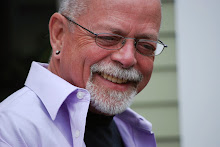
by Dwight Cathcart

by Dwight Cathcart

Sunday, February 20, 2011

Narratives, change, violence

Bo Ravich opens Adam in the Morning lying on the steps of the theatre where he works, on Sixth Avenue, and in the next two or three hours he becomes a different person. Narratives—stories—seem to require that characters change in some way, either suddenly, like Bo, or even more suddenly, like Fair Shaw in Race Point Light, who opens the Sunday paper on June 30, 1969—he’s reading about the same riots that are affecting Bo—and discovers that his life is transformed. But more usually, change comes gradually, over decades, somewhere between one’s twenties and one’s forties, or between one’s forties and one’s sixties. The biggest change people seem to experience is acceptance—of themselves, of other people, of their place in the scheme of things.

This may sound bland enough, but what is interesting about this process is that what people often come to accept is the need to fight. It is relatively easier to go on the way one has been going since one was born on the first page of the book, to allow inertia to carry one from day to day, avoiding the issues that are going to disrupt one’s life. As Derek says, in Ceremonies, “I wanted a good part with one good scene—Macduff, say, weeping for his children—and a pretty boy in my bed,” but whatever it was he wanted, he’s caught in the middle of a fight he didn’t start but can’t walk away from, even though he tries. He’s gay, and he can’t walk away from that, and when the bigots come out to fight, Derek finds there is no where safe to go. His change is his acceptance—of the need, in this case, to shed blood. This is a tough one.

Some people come to this acceptance early. Jack screams, "Fight, you son of a bitch! Come back and fight!" as some drive-by bigots get away. Some wait until the last possible moment, running from place to place until events and bigots catch up with them, and, their backs against the wall, they have to fight, have to transform themselves into something heroic. It may be that there are many heroic people who might not have chosen to be heroes if they had had a choice.
Friday, February 11, 2011

A literature that reflects us


A friend wrote this morning to say that he is frustrated by the state of gay publishing. Most gay books that come out are humorous essays about gay life and gay romance novels. I’d like to read something heftier, in which the kinds of things that affect me also affect the characters—that is, politics, race, class, a sense of the characters’ epoch. I’d like the novels I read to answer the question, How is it for you there? And I’d like that question to be treated seriously. 

But we don’t much get that kind of novel. The publishing industry is composed of agents, finders for agents, publishers, distributors, booksellers, journals that review books, reviewers, writers, and, finally, the book buyer. I am sure there are others. Most of them don't seem to know how to deal with a big gay serious book. They are clueless. And, of course, the book buyer going to the bookstore at the end of the foodchain to buy some serious novel is unlikely to go to a gay bookstore, because he has learned that gay bookstores don’t carry serious fiction. Gradually, over recent decades, our whole literature has gotten dumbed down. As readers, we don’t know any more what to demand of serious gay fiction than the rest of the publishing industry.

We are serious people. We confronted AIDS. We survived Reagan and Bush (I) and Bush (2), we have learned to work the political system, we have gotten gay marriage in some places, and we have fought against DADT and are fighting against DOMA. We are transforming what marriage means in this country and what this country considers a family. As gay people, we have fought in the great battles of our time. We have been heroic and successful.
We have been fighters. We have preserved those aspects of ourselves which were unique. But our literature does not reflect these things.  
Saturday, February 5, 2011

A beautiful film

In Night Catches Us, a film by Tanya Hamilton, Marcus, played by Anthony Mackie, comes back to Philadelphia after being away for ten years. His father has just died, and he has come back into a family struggling with the past. Marcus left, and his brother, who had to deal with his father, is resentful and wants no part of him. Young Jimmy, Patricia’s cousin, is resentful of the cops and thinks Marcus informed on Patricia’s husband, who was killed by the cops in an execution-style shooting in Patricia’s living room. Patricia, who is played by Kerry Washington, welcomes Marcus home, and Patricia’s daughter, Iris, wants to know what happened to her father.

There is enough stuff here to make a powerful movie. But what raises the stakes is that the film takes place in 1975, and Marcus and Patricia and several others of their friends in Philadelphia were members of the Black Panther Party, and what’s happening is that they are all trying to come to terms with their pasts, represented by the question of what happened to Patricia’s husband. Did somebody tell on him? Who? Why? Patricia says at one point, “That’s not what we were,” referring to the execution of a cop. But if not that, then what? And even more important for Marcus and Patricia now, How are we going to live now?

It is a deeply moving film which closely connects the racism of political Philadelphia, represented by the cops and their allies, both white and black, and the actions of the Black Panthers then, and the kids who would like to do what the Black Panthers did, now, with the poverty of their neighborhood and with the questions faced by Patricia and Marcus, What we are? And, How do we live now? 

 
It is a slow-moving, elegiac film, conveyed by slow quiet conversations, punctured by gunfire. At critical moments, the camera simply backs off and watches the water in an urban stream flow or the tangled vines of an urban jungle, blowing in a breeze. Long moments are spent as we watch the principals ponder their lives, staring off into the distance.

Tanya Hamilton has it exactly right. Life is interconnected, you can’t be on the streets of Philadelphia without knowing about poverty, the cops and the Panthers, and the fact that Patricia’s husband was executed, and that Marcus loved Patricia. To understand anything, you have to understand it all, and you can’t pick and choose, and you don’t really have the right or even the ability to make it pretty. Any of it. And yet, and yet, this is a beautiful film.
Monday, January 31, 2011

A different kind of gay novel

Joseph Roche was active in voter registration drives in Mississippi during Freedom Summer, in 1964. He was from Los Angeles, and in 1961 he volunteered for Freedom Rides after he saw the first one on TV and saw young people beaten by racist mobs. His mother had taught him about Marcus Garvey and black nationalism, and Martin Luther King had taught him about non-violence. Later, he went to UCLA, fought in the Watts Riot in 1964, and then went to New York, where he got an acting job with the New Lafayette Theatre, a leader in the Black Arts Movement. Joseph had sex with men, and he didn’t find that the way he was living made him feel better about himself.

Joseph got a job downtown, in the West Village, as Caliban, in a repertory production of The Tempest, and then found himself, early in the morning on June 28, 1969, fighting the cops after they had raided the Stonewall Inn. This was where he met Bo Ravich.

Trying to explain to Bo why he had come downtown, Joseph said, "I was aware of wanting to be in a community of fags. A group of us, six or eight brothers and sisters, would be out going to clubs after some event, and I was aware that people were pairing off, but it didn't seem possible for me to pair off."

Joseph is a character in Adam in the Morning, and for a novelist the question raised by Joseph’s life is What kind of literature does this life make? A literature grounded in the political and racial history of the characters, which inevitably explores the point at which the personal becomes the political and vice versa.


Bo talks about these matters with Joseph.

"We don't know many black men."

"No?"

"No. I'd like to know more. There've been other times in my life when I've had a lot more black friends than now."

"Well. Maybe I should seize this moment to tell you that I don't know many white gay men. Let's see how things work out. And if you guys are as cool as I think you are, there are some black dudes I could introduce you to."

'Is it OK for me to ask you these questions?"

"Oh, yeah. It makes us close." He kisses [Bo]. "And I have a lot of questions to ask you too, about being white." He smiles and kisses [Bo] again. "You don't seem like a devil."
Tuesday, January 25, 2011

Christopher Isherwood, George Falconer, the book and the movie, 1962

People in chat rooms say the movie of A Single Man, starring Colin Firth and Julianne Moore, is “completely different” from the book. The small group of lines from page 28 in the book—where George is thinking of what the neighbors must be thinking about him and Jim—turn into a significant addition to the big scene with Charley (Julianne Moore) in the movie. In the movie, it is Charley who asks whether he ever thinks of what “we could have been to each other, having a real relationship, with kids?” George answers, “I had Jim.” And Charley says, “What you and Jim had together was wonderful, but wasn’t it really just a substitute for something else?” George asks, “Is that what you really think, that Jim was some kind of substitute for real love?” Charley backs off. Tom Ford, who directed this movie, wants to be sure the moviegoer knows what he is seeing. This change from the book to the movie makes clearer how hostile George’s world is to George’s love for Jim, how hostile and how ignorant. Even his only friend has no idea how to value George’s love for Jim.

Only friend. In the movie, George connects, briefly, with the Spanish hustler he meets outside the liquor store and with Kenny, one of his students. Kenny pursues George after class, across campus, across town, and to the neighborhood bar near George’s house. “What do you want?” George asks. Kenny is unsure. Both of these men waltz around one another, unwilling or unable to reach out to each other. Why can’t Kenny, who seems to want to be taken, tell his teacher? And why can’t George, who seems to want Kenny, actually say, “I’d like to make love to you.” The moviegoer, watching these scenes at the bar, nude in the surf, and at George’s home, aches for them that they can’t do what they need to do, to give themselves to each other.


The changes the movie makes to the book are all there to make George’s loss clearer to the moviegoer, who may not have a sense of how it was for you then in 1962. George lives in a place where his culture is indifferent to his grief, and his grief is harder to bear because his culture is determined to make him bear it alone.